
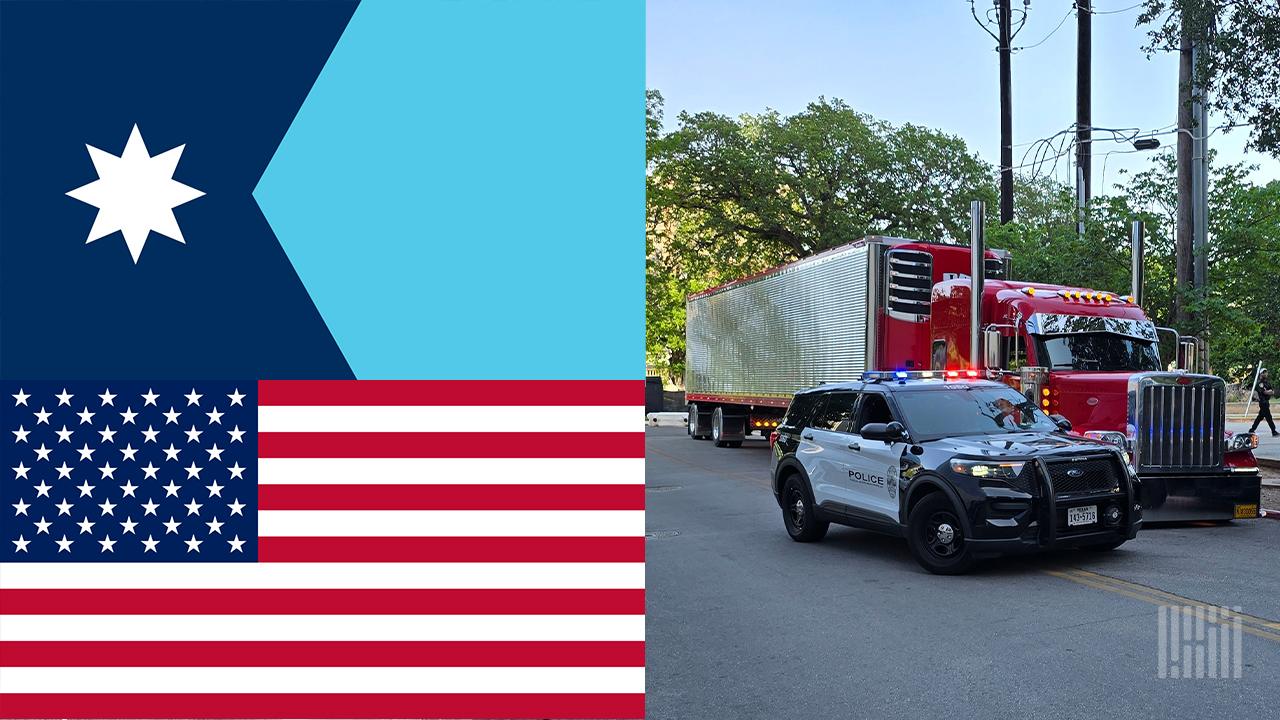
Minnesota Gov. Tim Walz issued a warning order to prepare the state’s National Guard on Wednesday following an Immigration and Customs Enforcement officer’s fatal shooting of a 37-year-old woman during immigration enforcement operations in south Minneapolis. Hours later, Minneapolis Mayor Jacob Frey delivered a blunt message to federal agents: “Get the f— out of Minneapolis.”
Walz went further, calling on Americans in other cities facing federal enforcement operations to “stand with us” against the Trump administration’s immigration crackdown. “To Americans who are watching this, if you’re in Portland or you’re in LA, or you’re in Chicago, or you’re wherever they’re coming next, stand with us,” Walz said at a Wednesday press conference. “Stand with us against this.”
For those of us who have been in this industry long enough to remember 1992, the words “south Minneapolis” and “National Guard” in the same sentence trigger a visceral response. They should. What’s unfolding in the Twin Cities right now has the potential to create dangerous conditions for drivers operating in urban environments, and the constitutional implications could reshape how we think about federalism, law enforcement, and the supply chain for years to come.
What’s Actually Happening
On Monday, the Department of Homeland Security announced what it called the largest immigration enforcement operation ever conducted, deploying approximately 2,000 agents to the Minneapolis-St. Paul metro area. The stated focus was suspected fraud involving Somali residents, though the scope appears broader than any single investigation would warrant.
Wednesday morning, at East 34th Street and Portland Avenue, just four blocks from where George Floyd was killed in 2020, an ICE officer fatally shot a woman in the head as she attempted to run over the officer. The shooting occurred during what DHS described as “targeted operations” when, according to federal officials, “rioters” began blocking ICE officers. DHS characterized the shooting as an act of self-defense against “domestic terrorism,” claiming the woman “weaponized her vehicle” to run over officers.
“Having seen the video myself, I want to tell everybody directly: That is bulls—,” Mayor Frey said of DHS’s self-defense claim.
The Insurrection Question: What Are We Actually Looking At?
Let’s cut through the political noise and examine what’s happening from a constitutional and practical standpoint, because this directly affects how you operate your fleet.
Governor Walz is preparing to deploy his state’s National Guard. He’s telling federal agents they’re not welcome. He’s urging other states and cities to resist federal enforcement operations. Meanwhile, federal agents are conducting operations that state and local officials characterize as dangerous and unnecessary.
Is this an insurrection? The word gets thrown around a lot these days, but it has a specific legal meaning under the Insurrection Act of 1807. That law empowers the president to deploy federal military forces and federalize state National Guard units under three primary conditions: when a state requests federal assistance to suppress an insurrection; when unlawful obstructions make it “impracticable” to enforce federal law through normal judicial proceedings; or when domestic violence deprives citizens of constitutional rights that state authorities cannot or will not protect.
The Trump administration has already deployed National Guard troops to cities including Los Angeles, Portland, Chicago, and Memphis under a related but separate statute. Federal courts have issued mixed rulings; a district judge in California ruled the LA deployment violated the Posse Comitatus Act, while litigation continues in other jurisdictions.
What makes the Minnesota situation potentially different is the explicit nature of state resistance. Walz isn’t just criticizing federal policy; he’s preparing state military forces that could, at least theoretically, be positioned against federal operations. That’s a line that hasn’t been crossed in modern American history.
The president’s options under the Insurrection Act are broad. If he determines that “unlawful obstructions” or “rebellion against the authority of the United States” exist, he can issue a proclamation ordering dispersal and then deploy active-duty military forces, not just the National Guard, to “suppress” the situation. The Supreme Court’s 1827 ruling in Martin v. Mott gives the president significant discretion in making that determination.
But, and this is critical, “broad discretion is not infinite discretion,” as Joseph Nunn of the Brennan Center for Justice has noted. The statutory language must be read against American civic traditions that treat domestic military deployment as an absolute last resort. Every governor in the country opposed expanding these powers in 2008 when similar amendments were proposed and later repealed.
Why Trucking Should Care and Who Is Reginald Denny
On April 29, 1992, Reginald Denny loaded 27 tons of sand into his dump truck and headed toward Inglewood. He was listening to Christian radio, taking his usual shortcut along Florence Avenue, completely unaware that the verdicts in the Rodney King case had just been announced.
At the intersection of Florence and Normandie, rioters pulled Denny from his cab and beat him nearly to death. His skull was fractured in 91 places. His left eye was so badly damaged it would have fallen into his sinus cavity without surgical intervention. The attack was broadcast live from news helicopters while police refused to enter the area.
Denny survived only because four strangers, Bobby Green, Lei Yuille, Titus Murphy, and Terri Barnett, saw the attack on television and drove into the riot zone to rescue him. Green, himself a truck driver, climbed into Denny’s cab and drove him to the hospital.
“This is a civil war,” Denny said later. “This is not me against Mr. Watson, it’s not a personal vendetta. The problems were happening before Mr. Watson and I were born.”
The Denny attack became the defining image of what happens when civil order breaks down and professional drivers find themselves in the wrong place at the wrong time. It should inform every decision you make about operations in volatile areas.
What Fleets Should Do Right Now
The American Trucking Associations, in coordination with its Safety Management Council and Transportation Security Council, has issued guidance for operating in areas of civil unrest. Having covered situations like this for years, and having been a fleet owner myself ,here’s what I’d add:
Dashcams are no longer optional. If you’re still running equipment without forward-facing video, you’re exposing yourself to liability you can’t afford. In the 2020 Minneapolis protests, Kenan Advantage Group independent contractor Bogdan Vechirko inadvertently drove into protesters on I-35 West. He didn’t hit anyone, but he was pulled from his cab and beaten until other protesters intervened. Without video evidence, he could have faced criminal charges. Modern AI-powered dashcam systems from providers like Motive, Samsara, and others provide real-time alerts, GPS documentation, and cloud storage, helping exonerate drivers and protect your fleet from fraudulent claims.
Real-time fleet visibility is essential. You need to know exactly where every unit is and the ability to communicate route changes instantly. ELD and telematics systems provide this, but only if you’re actively monitoring. Establish protocols for checking driver locations against developing situations in urban areas.
Route around, not through. The ATA guidance is clear: even peaceful protests can turn violent quickly. If you have loads moving through Minneapolis, Portland, Los Angeles, Chicago, or any city with active federal enforcement operations, build in alternate routing now. Contact receivers to verify conditions at delivery points. Most violence occurs at night; schedule daylight deliveries when possible.
Train your drivers on worst-case scenarios. The Iowa Motor Truck Association’s guidance includes details most safety managers don’t consider: lock doors automatically (especially the passenger side); if attacked, remove your seatbelt before the situation escalates so you can exit quickly if needed; crack windows slightly before complete closure because partially open windows are harder to break than fully closed ones; turn off ventilation to prevent smoke or tear gas infiltration. If surrounded, do not attempt to drive through a crowd. Stop, secure the vehicle, and call 911 immediately.
Engine immobilizers and kill switches deserve consideration. Modern telematics systems can remotely disable vehicles. In a hijacking or civil unrest scenario, the ability to prevent your equipment from being used as a weapon or stolen could be the difference between an insurance claim and a catastrophic liability event.
Hazmat carriers face elevated risk. If you’re hauling hazardous materials through affected areas, call 911 immediately upon encountering any obstruction. Identify your location and cargo to first responders. The potential consequences of a hazmat vehicle becoming involved in civil unrest are too severe to manage reactively.
What’s happening in Minneapolis is a stress test for American federalism that will directly impact freight operations regardless of how it resolves. If federal-state tensions escalate, we could see disruptions to supply chains serving major metropolitan areas. If the administration invokes the Insurrection Act, the deployment of military forces would create unprecedented operational challenges for commercial vehicles.
Governor Walz told Minnesotans, “Do not allow them to deploy federal troops into here. Do not allow them to invoke the Insurrection Act. Do not allow them to declare martial law.” Those words carry weight. They also carry consequences.
As fleet operators, we don’t get to choose which side of a constitutional crisis we agree with. We have to move freight regardless of who’s right and who’s wrong. That means preparing for scenarios we’ve never faced, scenarios where the normal assumptions about law enforcement cooperation, road access, and driver safety may not hold.
Reginald Denny was just a guy doing his job, taking his usual route, listening to the radio. Thirty-four years later, we have better tools, better communication, and better information. What we do with those advantages is up to us.
The post Minneapolis, 1992, and What Fleets Need to Know About the Insurrection Act appeared first on FreightWaves.