
The FMCSA added 12 more ELDs to the board today. Twelve electronic logging devices were pulled from the registered list in a single announcement, the largest single-day revocation event since the eight-device Gorilla Fleet Safety sweep in May 2025. The devices are 888 ELD from MAUMAU LLC, Dragon ELD, Action ELD, Mondo ELD HOS from Mondotracking Solutions, two versions of First ELD from First ELD LLC, two devices from Power ELD LLC including MTL ELD and USPower ELD, Sam Freight ELD from Sam Freight Management LLC, DSGELOGS from DSG Tracking LLC, Cobra ELD from Cobra Connect LLC, and GT USA ELOGS from GT ELD. All failed to meet the minimum technical requirements in 49 CFR Appendix A to Subpart B of Part 395. All are now on the revoked list.
That brings the total to 79 devices removed since January 2025. Seventy-nine. Thirteen days ago, I wrote about revocations 67 and 68, Safe ELD and MYLOGS ELD, and said the pace was running at more than four per month. That number is now closer to five. In 16 and a half months, the FMCSA has removed an average of 4.8 devices per month from the registered list. Today alone accounts for more than two and a half months of that average in a single afternoon.
Administrator Derek Barrs did not soften the message. “Safety is not optional, and neither is compliance. FMCSA is serious about removing unsafe and unreliable electronic logging devices from the market and holding manufacturers accountable to federal safety standards. These standards are in place to help protect everyone traveling on American roads.”
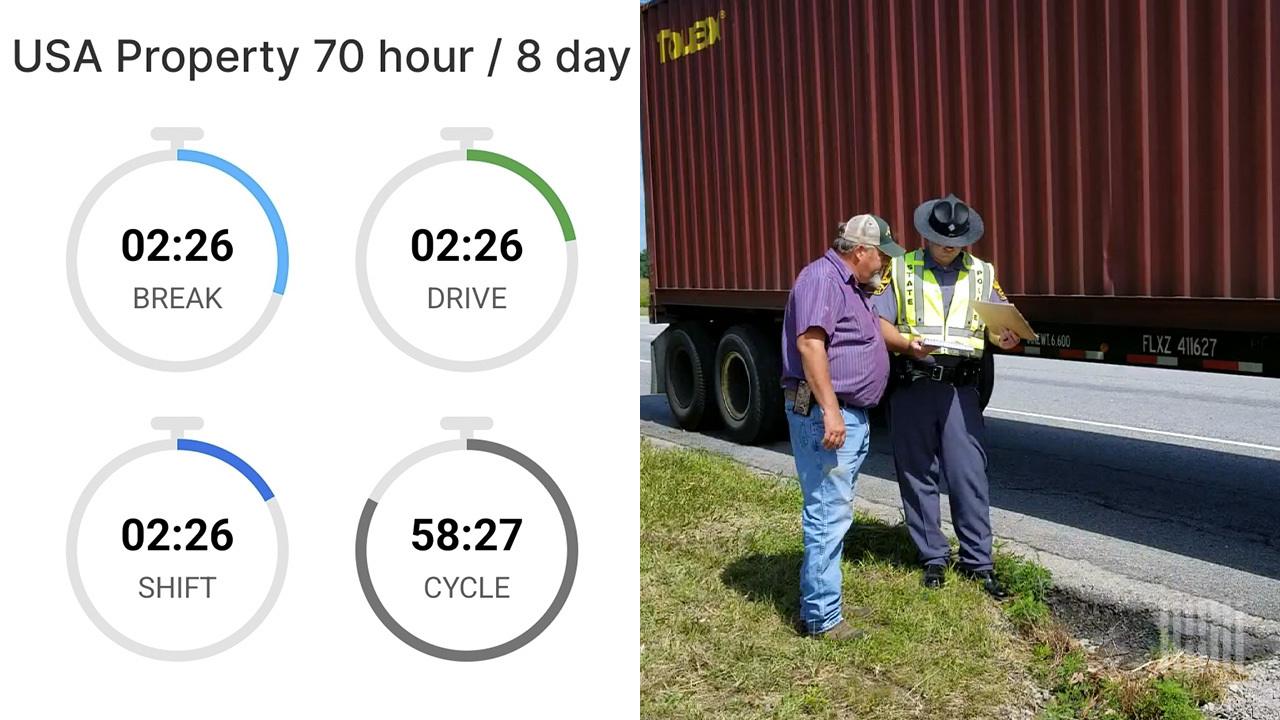
If you are running any of the 12 devices named today, here is your timeline. Stop using it now. Revert to paper logs or compliant logging software. Replace the device with a compliant ELD from the registered list before July 20, 2026. That is the 60-day window. Before July 20, roadside enforcement officers were being told not to cite drivers using the revoked devices for 395.8(a)(1) or 395.22(a). After July 20, you will be cited and placed out of service. The truck stops. The load does not move. Your company eats a violation that shows up in SMS, in inspection reports, and in every carrier vetting system that pulls FMCSA data.
That is the compliance part. You have read it before. I wrote it 13 days ago for Safe ELD and MYLOGS. I wrote it last May for the Gorilla Fleet batch. The compliance guidance does not change because the problem does not change. A manufacturer self-certifies a device, the FMCSA registers it, carriers buy it, and months or years later, the FMCSA discovers it does not actually work and pulls it off the list. The carrier and the driver absorb the cost. The manufacturer has already been paid.
The FMCSA-registered ELD list currently lists approximately 1,050 devices. The revoked list now exceeds 250. Seventy-nine of those revocations have come in the last 16 and a half months. Here is the part that nobody is talking about. Look at the inflow. How many new ELD registrations has FMCSA added during the same period? The answer, based on registry monitoring, is that there aren’t many. The list is getting shorter, not longer. Devices are coming off faster than they are going on.
If FMCSA continues pulling four to five devices per month and the new registration rate stays flat or near zero, the registered list contracts. The pool of available devices shrinks. The devices that remain are disproportionately the ones that have survived years of scrutiny, the ones backed by companies with real engineering teams, real support infrastructure, and real customers who would notice and complain if the device stopped meeting spec. The bottom of the market, the $50 app store ELDs, the devices sold by LLCs registered to a single person in a strip mall, the providers who filled out a self-certification form and never thought about it again, those are the ones getting pulled. And they are not being replaced by new entrants of the same caliber because the new entrants can see the enforcement trend and the cost of entering a market where your device might get yanked before you break even.
That is a de facto quality filter operating through enforcement rather than regulation. Are we moving to a third-party certification model?
The Canadian ELD mandate requires third-party certification before a device can be used. An accredited independent organization tests the device and confirms it meets the standard before it goes on the market. The manufacturer does not get to grade its own homework. The result is a smaller list of devices that actually work, verified by somebody other than the company selling them.
The United States has never adopted that model. The ELD rule, as written in 2015 and implemented in 2017, relies entirely on manufacturer self-certification. Congress did not require third-party testing. FMCSA did not impose it through rulemaking. The registered list has always been a filing cabinet, not a quality certification. I have said that before, and I will keep saying it until it changes.
FMCSA is not waiting for Congress or a new rulemaking to fix the certification model. Barrs is doing it operationally. Seventy-nine revocations in 16 months is not a periodic cleanup. That is a systematic audit of the registered list, working through it manufacturer by manufacturer, pulling everything that does not hold up. If you keep doing that long enough and the inflow of new registrations stays low, you end up with a registry that functionally resembles a third-party certification outcome. Not because someone tested every device before it went on the market, but because someone tested every device after it went on the market and removed the ones that failed.
The problem with that approach is who pays for the testing. In a third-party certification model, the manufacturer pays before the device reaches the market. In FMCSA’s current enforcement model, the carrier and driver pay after the device has already been deployed, integrated, relied upon, and then pulled out from under them with 60 days’ notice. The enforcement model produces the same result as the certification model. It just distributes the pain differently. The pain falls on the people who had the least information and the least ability to evaluate whether their device was actually compliant.
If you are a motor carrier reading this and your ELD is still on the registered list, do not assume you are safe. Check when your device was registered. Check whether the manufacturer is still in business. Check whether they have a phone number that someone answers. Check whether they have released a software update in the last 12 months. Check whether any of their other devices have been revoked, because a manufacturer that loses one device to a compliance failure may have the same engineering problems across its entire product line.
If you are running one of the 12 devices revoked today, you already know what to do. Paper logs now. New device before July 20. Do not wait until July 19.
If you are a fleet that has not thought about ELD vendor risk as a compliance category, start thinking about it now. The registered list had roughly 1,050 devices when I checked last. If FMCSA maintains the current pace, that number will be below 1,000 before the end of the year. The vendors that survive will be the ones with real engineering, real testing, real support, and real customers. The vendors that do not survive will leave their customers holding a revoked device and a 60-day countdown.
There are two possible futures here.
The first is that FMCSA continues the enforcement-based approach indefinitely. Barrs keeps pulling devices. The list keeps shrinking. New entrants slow to a trickle because the cost of building a device that survives audit is higher than the cost of self-certifying a device that might not. The market consolidates around 15-20 serious providers. Carriers pay the transition costs every time a device gets pulled. The outcome is a reliable registry, but the path to get there is paid for by carriers and drivers who bought what they were told was compliant.
The second is that someone in Washington looks at 79 revocations in 16 months and decides the self-certification model has failed, and it is time to formalize third-party certification. That means a rulemaking. That means a comment period. That means years. It also means manufacturers pay the testing cost before the device reaches the market, carriers stop absorbing the cost of someone else’s compliance failure, and the registered list becomes what most carriers already think it is, which is a list of devices that have actually been verified by someone with no financial interest in the outcome.
I have talked to Chief Barrs at FMCSA. I have talked to people inside the agency. I do not have a definitive answer on which path FMCSA is taking because I am not sure the agency has committed to one yet. What I can tell you is that enforcement is not slowing down, the registered list is not growing, and the practical effect of both is a smaller, higher-quality device market that increasingly looks like what a formal certification program would produce.
Seventy-nine and counting. The registered list is a filing cabinet, but it’s being cleaned out, and what is left afterward might be worth something after all.
The post 79 ELDs revoked since January. 12 more just hit the list. appeared first on FreightWaves.
Fuente: https://www.freightwaves.com/news/79-elds-revoked-since-january-12-more-just-hit-the-list