
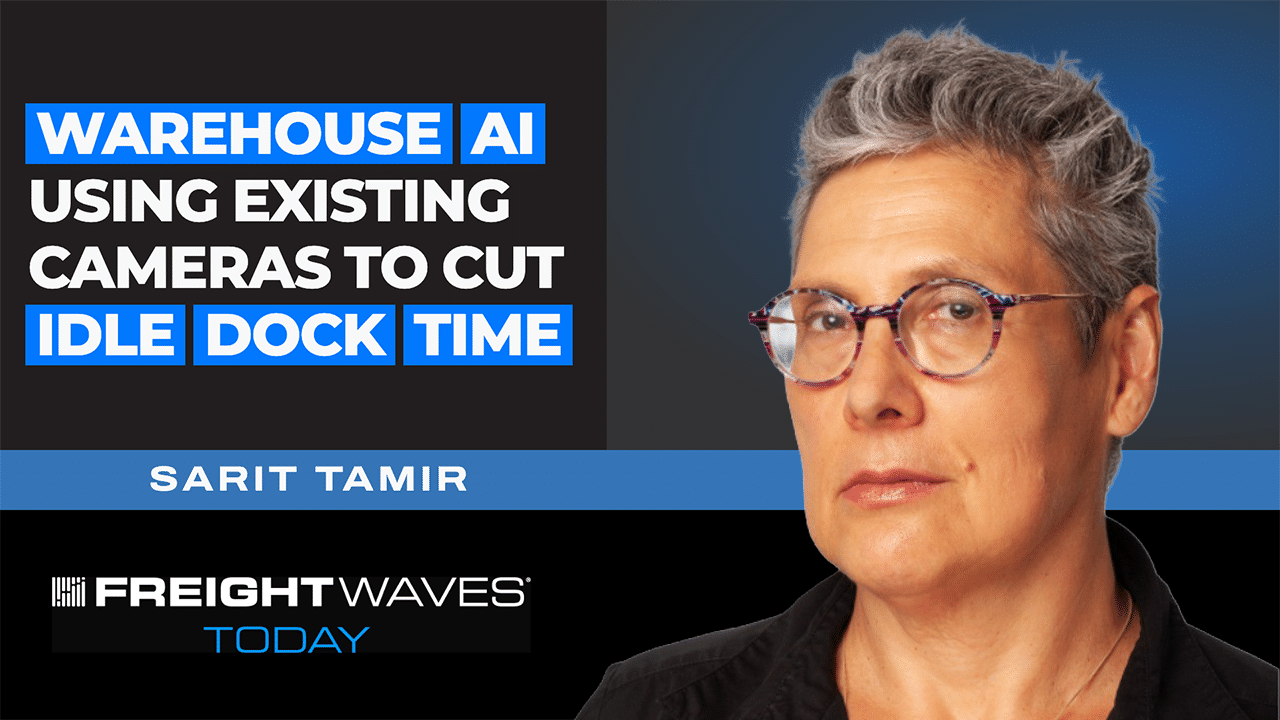
Warehouse cameras can reveal hidden lost capacity every shift — without new hardware. Sarit Tamir, founder and CEO of Seeteria, explains how existing warehouse cameras can flag idle dock doors, blocked aisles, forklift congestion and staging imbalances in real time. The pitch is simple: find disruptions that look normal, fix them faster, and turn lost time back into throughput. The conversation also gets into privacy, supervisor alerts, executive visibility and why these small delays can add up to hours of missed capacity per shift.

Seeteria, an early-stage warehouse AI startup, is targeting a problem that most warehouse managers don’t know they have: incremental capacity losses that accumulate silently across every shift. The company’s platform connects to a facility’s existing camera network via Wi-Fi, analyzes activity across the floor in real time, and alerts supervisors when disruptions — idle dock doors, forklift queues, overloaded staging areas, blocked aisles — require immediate attention.
The core pitch is that no new hardware, no new sensors, and no new system integrations are required. “Our goal all the time is to get the warehouse more capacity from the resources that they are already paying for,” said the Seeteria founder, who has spent more than a decade building AI and computer vision solutions for logistics, warehousing, and manufacturing.
“When you sum them and they add up into hours of lost capacity every shift.”
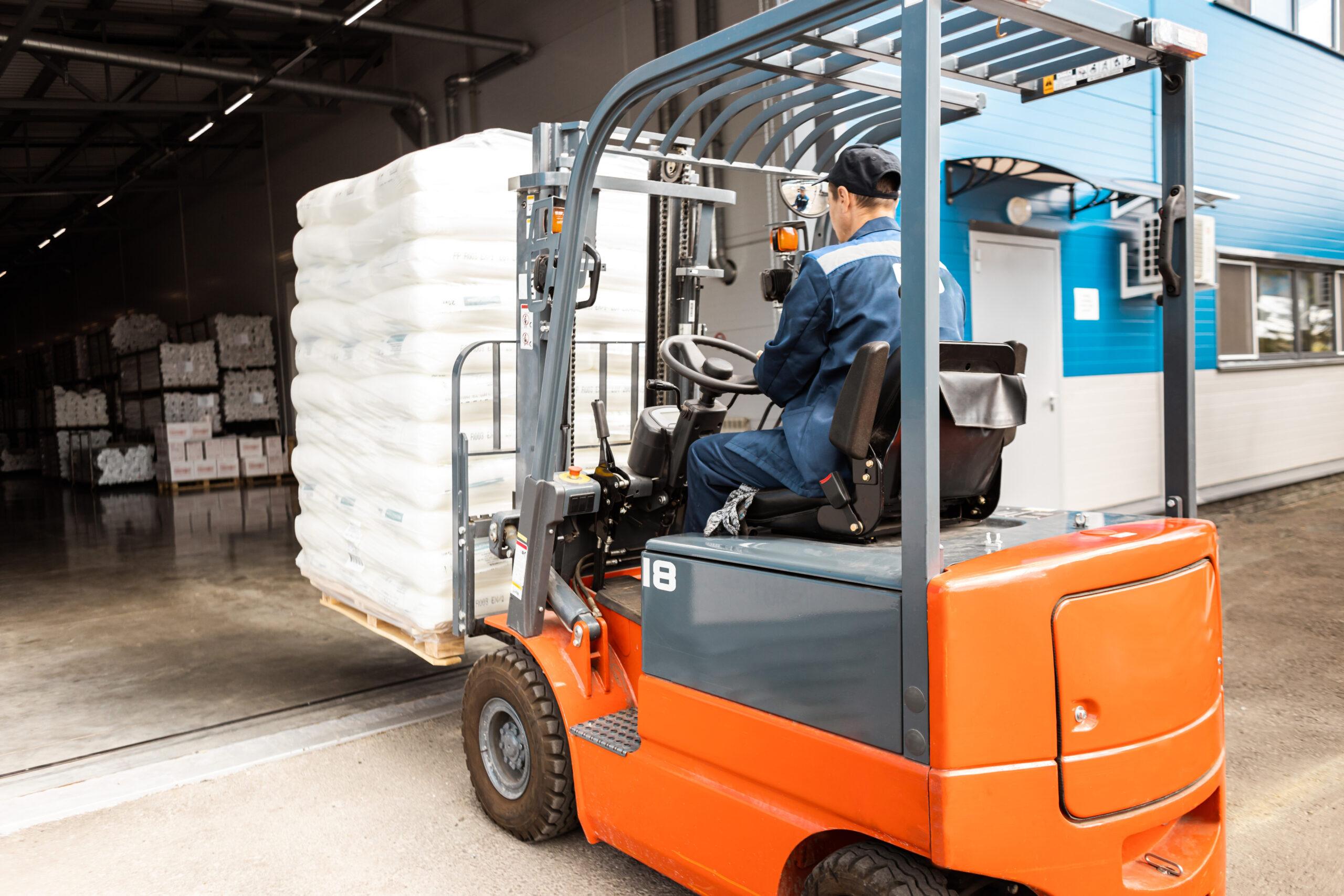
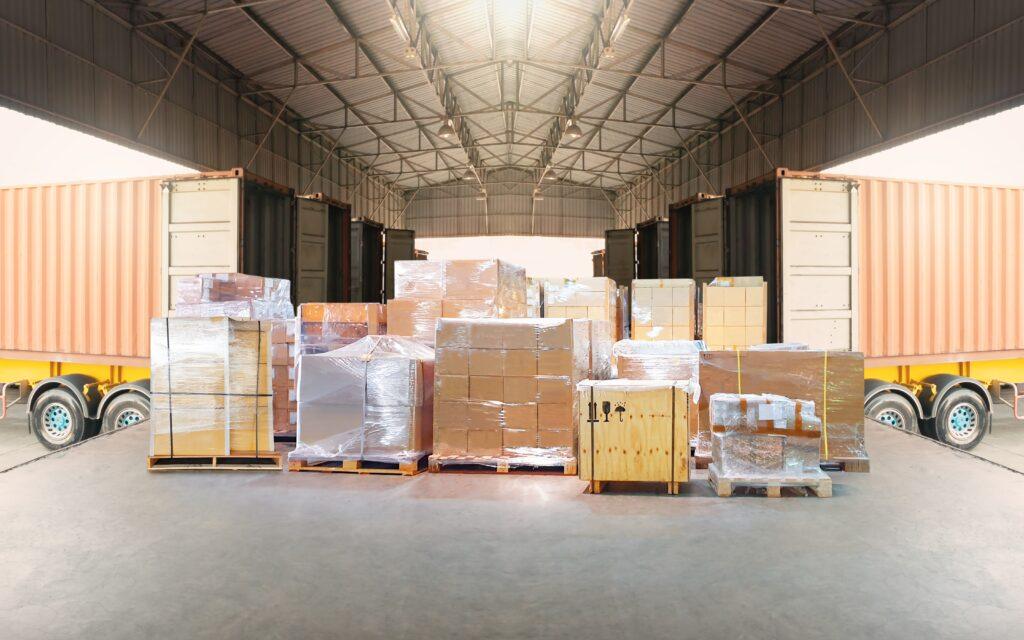
That framing matters to operations managers who routinely dismiss individual disruptions as minor. A dock door sitting idle for 7 minutes, a forklift rerouted around a blocked aisle for 12 minutes, a staging area congested for 15 minutes — each incident can look inconsequential in isolation. Compounded across dozens of doors and dozens of forklifts over an eight- or ten-hour shift, the founder argues the cumulative throughput loss becomes significant.
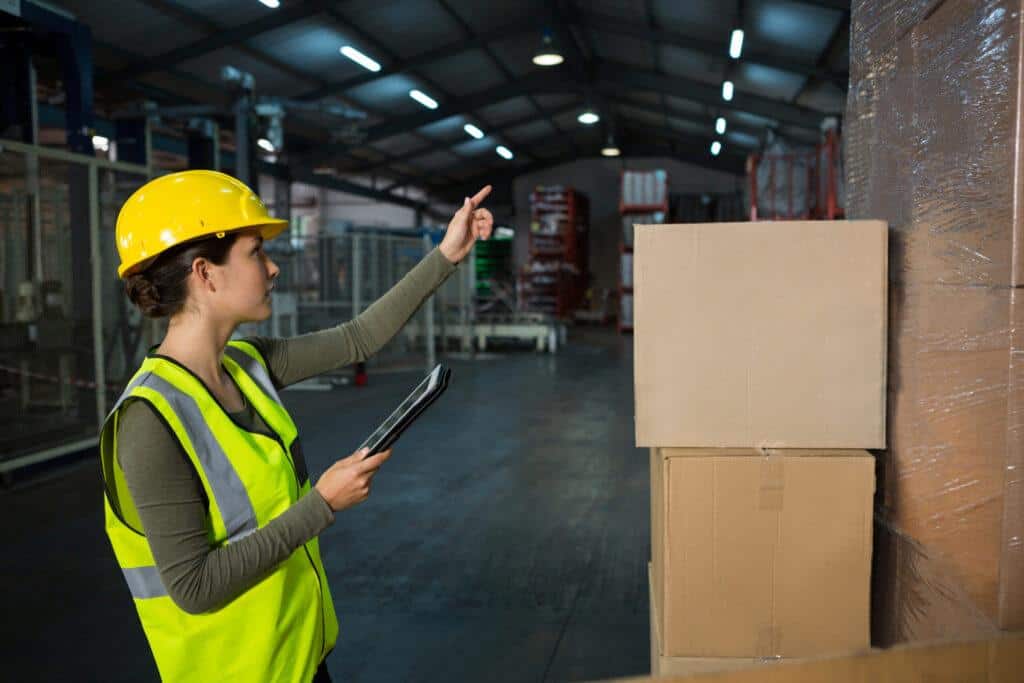
The platform serves three distinct user tiers. Floor supervisors receive live push alerts on a mobile or tablet app showing a color-coded status for each door and zone — green, yellow, or red — so they know exactly where to respond. Warehouse managers receive a post-shift summary of bottlenecks to improve flow shift over shift. Executives see a financial-impact view tied to metrics such as detention fees and missed throughput targets. The founder noted that warehouse supervisors walk roughly 8 miles per shift, and said the app was built to reduce that burden rather than replace the worker.
Privacy is a deliberate design constraint. The system does not identify people; it identifies objects, movement, zones, and events — forklifts, pallets, dock doors, and congestion patterns. “The system is completely blind to people,” the founder said, adding that the decision was driven by a commitment to worker privacy and an effort to reduce anxiety about AI surveillance on the floor.
Seeteria is actively recruiting U.S. pilot partners. The minimum threshold the founder cited is a facility with at least eight active dock doors and a meaningful forklift fleet; smaller operations, the founder said, are unlikely to see sufficient return. The company recently completed a stint at the CoLab accelerator in Chattanooga, Tennessee — a connection made at the Home Delivery World conference in Nashville — and announced a new pilot launch in Chattanooga is imminent.
The company name derives from Soteria, the Greek goddess of safety, but the spelling was changed from “SO” to “SEE” to reflect its computer vision focus — an origin the founder traced to a family visit to the Vatican in Rome.
- Citera’s AI uses warehouses’ existing cameras via Wi-Fi — no new hardware or integrations required — to detect idle docks, blocked aisles, and forklift queues in real time.
- Small disruptions of 7 to 15 minutes each compound into hours of lost capacity per shift, according to the founder, who has over a decade of AI and computer vision experience in logistics.
- The platform targets facilities with at least 8 active dock doors; Seeteria is actively seeking U.S. pilot partners and has a new pilot launching soon in Chattanooga, Tennessee.
This Summary is generated thanks to a transcription of the interview, for the full interview please enjoy the video above.
The post Warehouse AI Using Existing Cameras to Cut Idle Dock Time appeared first on FreightWaves.
Fuente: https://www.freightwaves.com/news/warehouse-ai-using-existing-cameras-to-cut-idle-dock-time