
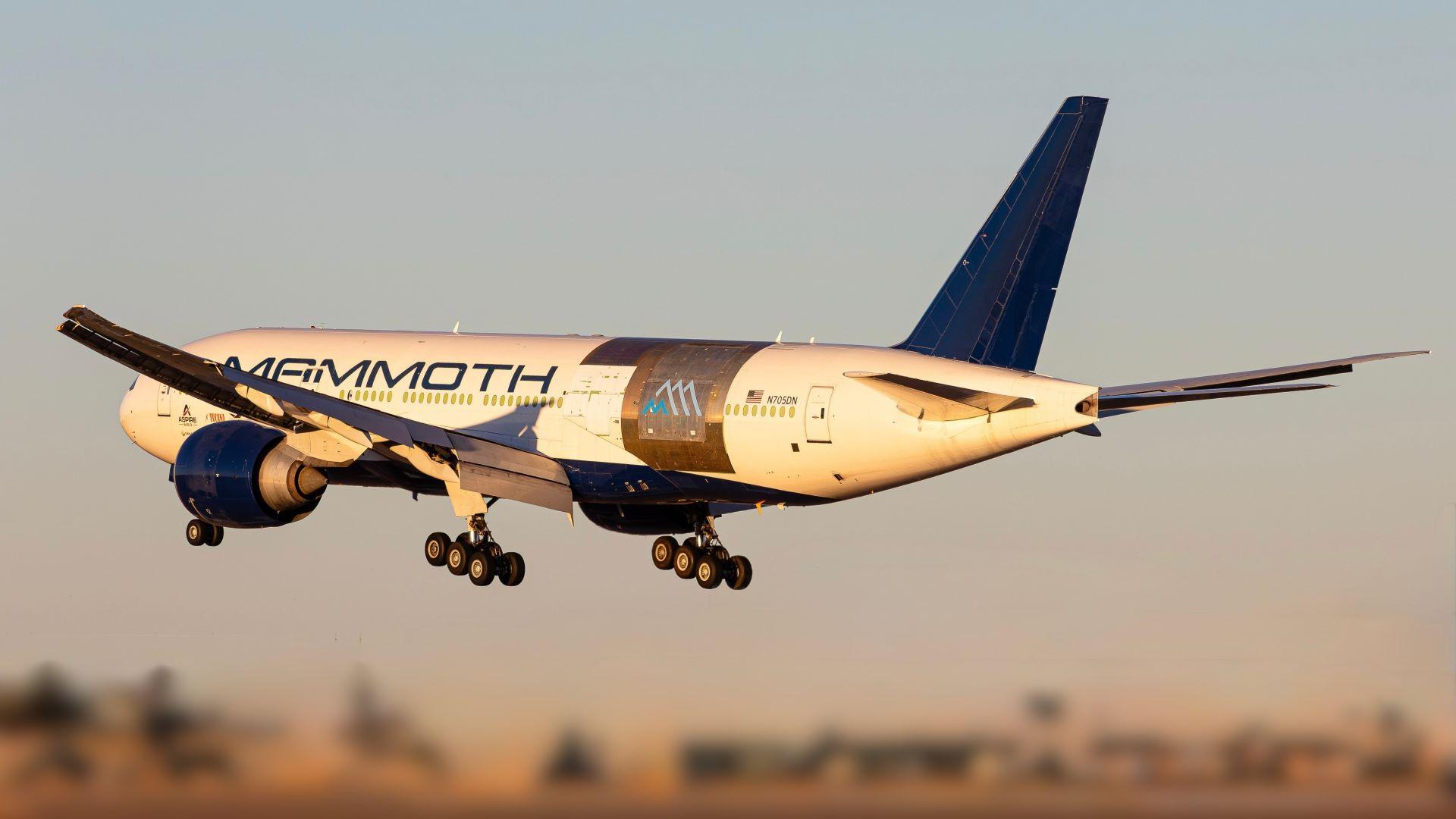
The Federal Aviation Administration has certified Mammoth Freighters LLC, a startup aerospace firm backed by Fortress Investment Group, to convert Boeing 777-200 Long-Range passenger aircraft into dedicated cargo jets capable of carrying containers on the main deck, the company announced on Wednesday. It is the first time that a 777-200 converted freighter has been built.
Meanwhile, Ethiopian Airlines has signed a deal for the conversion of two 777-200s into freighter aircraft, Kevin Casey, president of Texas-based aircraft dealer Jetran, told FreightWaves. Ethiopian has sent two aircraft from its passenger fleet to Mammoth Freighters, which will begin modifying the planes next month. Jetran has also purchased four 777-200 passenger jets from Ethiopian that it will convert for other customers.
Ethiopian Cargo, the air logistics division of Ethiopian, operates 10 factory-built 777-200s, three 767-300s and four 737-800 converted freighters, according to its website.
FAA certification validates the aircraft’s design, engineering, and performance, clearing the Mammoth Freighters 777-200 for commercial service at a time when airlines are clamoring for widebody freighter capacity as older planes reach retirement age. Next-generation Boeing and Airbus factory-built freighters have experienced development delays and Boeing will stop manufacturing medium widebody 767 freighters at the end of 2027.
Jetran is partnering with Mammoth Freighters on the market launch for the 777-200 converted freighter by acquiring used passenger jets, contracting for conversion and reserving production slots. Airlines with agreements to acquire the planes from Jetran include Qatar Airways, DHL Express and Ethiopian Airlines.
“From the outset, we have had strong confidence in the Mammoth engineering team and their vision for the program. The aircraft’s quality and technical execution have met our high expectations and reflect the strength of the underlying design. We believe the Mammoth conversion will be a competitive and compelling option in the long-haul freighter market and will deliver solid value for Jetran’s customers,” said Jetran CEO Jordan Jaffe, in a news release.
Airframers have converted many aircraft types for decades, but 777s modified for all-cargo operations are now entering the market for the first time. Converted freighters cost tens of millions of dollars less to acquire than a factory-built jet. Israel Aerospace Industries, in partnership with global leasing company AerCap, late last year received FAA approval for its aircraft conversion kit for the 777-300 Extended Range freighter. Michigan-based Kalitta Air currently operates seven of IAI’s 777-300 converted freighters, including some for DHL. Israel-based Challenge Group began flying its first 777-300 in March.
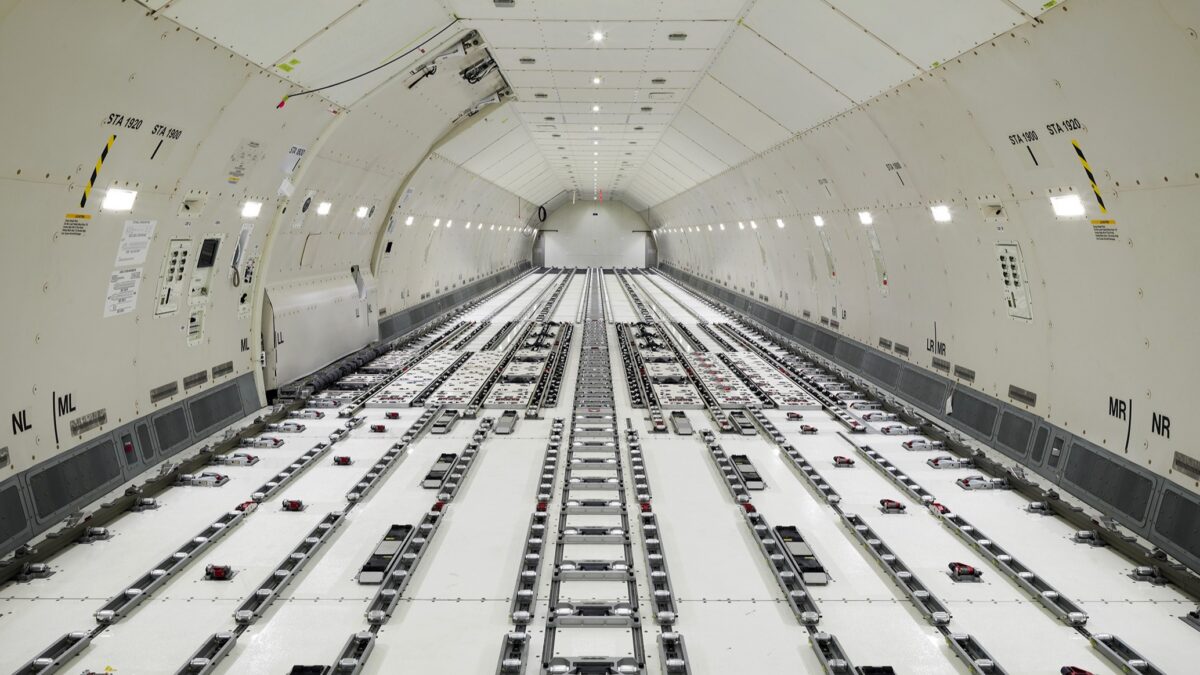
Mammoth Freighters has spent more than six years developing its conversion system for the 777. The conversion process includes installing a wide cargo door, reinforced flooring, a rigid 9G barrier in front of the cockpit, main-deck temperature controls and a cargo handling system system for maneuvering large pallets. Reconfiguring a large aircraft like a 777 takes about six to eight months. Once a steady state is achieved in its production lines, Mammoth anticipates being able to complete conversions in under six months as installation methods and process matures, said Brian McCarthy, the company’s vice president of marketing and sales.
At the peak of design and engineering phases, Mammoth and its vendors and subcontractors employed about 290 engineers.
The company began test flying the 777-200 last July and has nearly finished production on a handful of aircraft in anticipation of certification. Its main assembly hangar is in Fort Worth, Texas. The former American Airlines heavy maintenance facility has six widebody hangar bays. Four B777-200s are currently in various stages of conversion, along with one 777-300, with more aircraft on site awaiting modification, according to a Mammoth fact sheet.
Mammoth also has two production lines in Manchester, England, at a facility operated by STS Aviation Group.
Qatar Airways has commitments for five Mammoth aircraft. It will receive the first two completed aircraft. Mammoth and Jetran will deliver the next few 777-200s to DHL Express, which ordered nine aircraft in 2023 for purchase and has since agreed to acquire two additional planes under long-term leases from Jetran. The planes will be placed on DHL’s operating certificate in the United Kingdom and be based at East Midlands Airport. DHL Aviation, the express carrier’s in-house airline, could operate the planes itself or lend them to partner carriers to operate on its behalf.
Officials from the UK’s Civil Aviation Authority will inspect the DHL aircraft at Mammoth’s Fort Worth facility before approving them to be added to DHL’s license. Jetran plans to deliver the planes to DHL in time for the peak shipping season, starting in October, Casey said.
Certification has taken longer than expected. Mammoth Freighters originally signaled it could begin delivering planes to customers in 2024. Last year, company officials expressed hope the FAA would approve their supplemental type certificate by June, followed by certification of its 777-300 passenger-to-freighter conversion package.
Lingering supply chain bottlenecks following the Covid pandemic and limited FAA resources directed towards reviewing applications for 777 structural modifications delayed certification of conversion programs from Mammoth Freighters and IAI, aerospace industry executives have said. Widespread criticism for oversight of Boeing’s manufacturing following two 737 MAX crashes and a door-plug blowout during flight have made FAA regulators excessively cautious when reviewing any new designs.
Next steps
Mammoth will soon pursue 777 conversion certification from authorities in Qatar and the European Union Aviation Safety Agency, said McCarthy.
The FAA is also expected to sign off this summer on an increase in the 777-200’s maximum payload after Mammoth demonstrates how it plans to remove fittings, manifolds and wiring previously connected to auxiliary fuel tanks, which are not being used in the cargo variant, he said.
The manufacturer also is scheduled to take an aircraft to Iceland to test the aircraft’s auto landing capability in 25-knot crosswind scenarios, which will pave the way for the increased payload approval, McCarthy and Casey said.
Avia AM Leasing is the launch customer for Mammoth’s 777-300 freighter, with six conversions on order. Mammoth could receive 777-300 certification as soon as this fall, McCarthy said. The company predicts a total market of more than 250 aircraft for the aftermarket converted 777-300ER variant, with about 45 to 50 of the -200s given limited supply.
Boeing 777s have a large carrying capacity and a wide fuselage that make them well suited for dense freight and light e-commerce shipments.
The Mammoth Freighters design offers similar features as the production freighter, with a payload capacity of 116 tons and a range of 4,900 nautical miles. The twin-engine aircraft is 18% more fuel efficient than a Boeing 747-400. The 777-300 has 14% more volume than a 747-400 and is ideal for lightweight freight that takes up space because it has more interior volume but a similar weight payload compared to its sister. That will translate into six more main deck pallet positions than the -200LR, according to Mammoth.
Click here for more FreightWaves/American Shipper stories by Eric Kulisch.
Write to Eric Kulisch at ekulisch@freightwaves.com.
RELATED STORIES:
Air Canada leases surplus Boeing 767 freighter aircraft to Ethiopian Airlines
Kalitta Air deploys 1st 777 converted freighters for dedicated customers
Qantas Freight adds freighter connections to Shanghai, Bangkok
The post FAA approves 1st Boeing 777-200 passenger-to-freighter conversion appeared first on FreightWaves.
Fuente: https://www.freightwaves.com/news/faa-approves-1st-boeing-777-200-passenger-to-freighter-conversion