
WASHINGTON — The Federal Highway Administration is calling on the private sector to come up with the additional money needed to relieve one of the country’s top freight chokepoints.
The American Legion Memorial Bridge along the Capital Beltway outside Washington, D.C. – the primary East Coast bypass for long-distance trucks – is costing the freight industry an estimated $43 million in delays due to congestion.
But because the state of Maryland does not have the money to replace it, FHWA has put out an information request seeking “innovative project delivery methods” to get the project moving.
“Public-private partnerships (P3s) help address public funding constraints by enabling projects to be financed over longer periods, transferring appropriate risks to the private sector, reducing lifecycle costs through private-sector efficiencies, and leveraging private capital to support upfront construction,” FHWA states in a notice posted on Wednesday.
“[Transportation] Secretary [Sean] Duffy has emphasized a commitment to making the United States the world’s leading destination for private infrastructure investment. Collaboration with the private sector also introduces additional due diligence and diversifies funding sources, enhancing both accountability and project delivery.”
The 60-year old bridge is located on the west side of the beltway, and the chokepoint it creates ranks the corridor at Number 19 on the American Transportation Research Institute’s Top 100 truck bottlenecks.
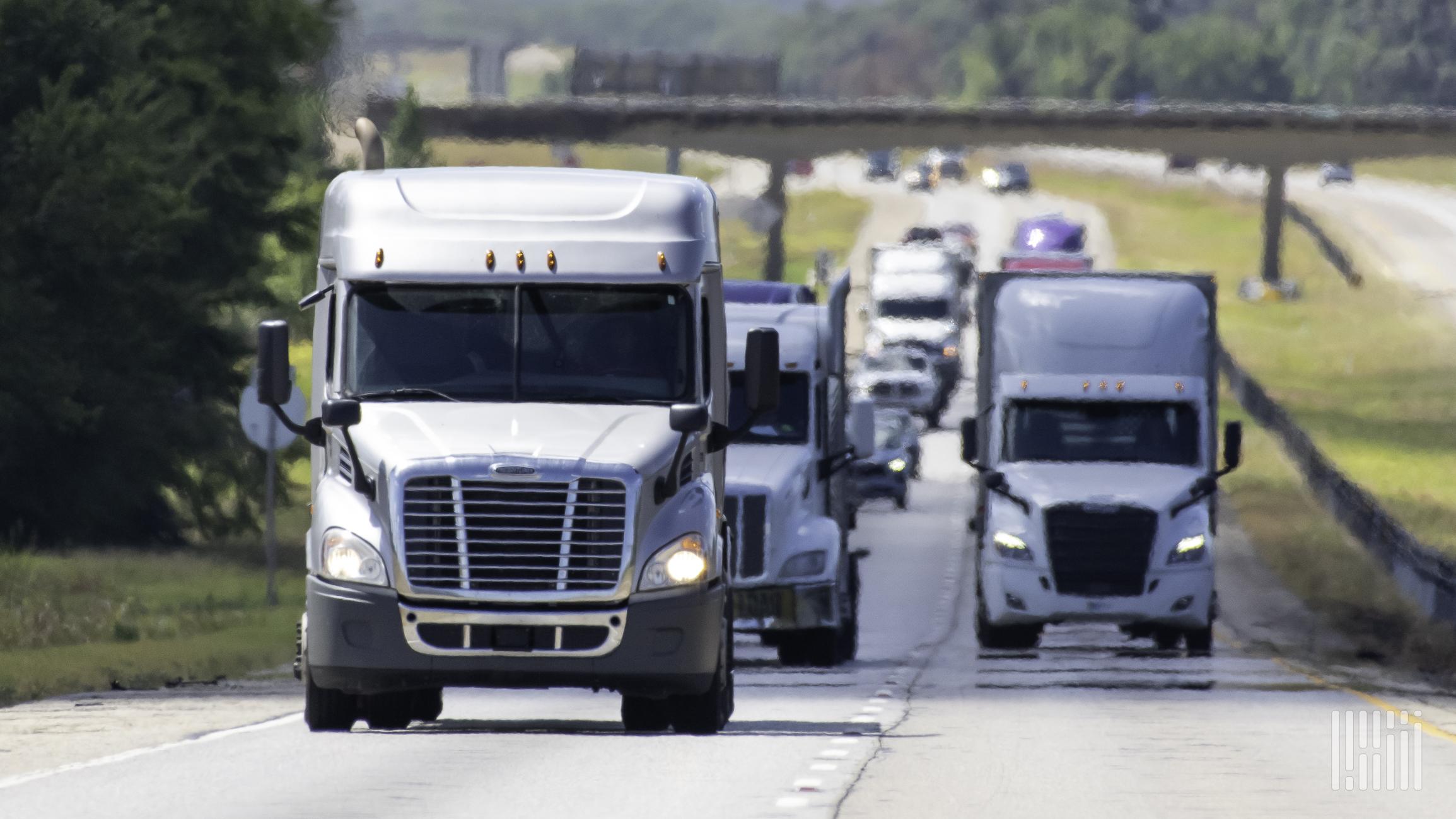
FHWA noted that the bridge carries average annual daily traffic of over 216,000 vehicles and 21,400 heavy trucks per day, with peak speeds frequently falling to roughly 15 mph. “Congestion at the Bridge is prolonged and recurring, which translates directly into measurable costs,” FHWA noted.
“Freight-dependent industries (transportation, wholesale and retail trade, manufacturing support) represent a major component of the regional economy, collectively contributing about 19% of the region’s Gross Domestic Product (over $660 billion in 2022). Recurring congestion along this high-volume freight corridor drives up business operating costs, reduces economic competitiveness, and ultimately increases costs for consumers.”
FHWA emphasized that the information request, which is open for comments until Feb. 9, 2026, will help the agency’s internal reviews of the project and be provided to Maryland, which owns the bridge, for further consideration.
Questions to which FHWA seeks responses include:
- How has congestion around the American Legion Memorial Bridge affected your daily commute, fuel consumption, travel time, and reliability?
- What direct and indirect economic impacts have you observed (e.g., reduced productivity, increased freight or delivery costs, missed appointments or shipments, lost sales, increased vehicle operating costs)?
- Has the congestion around the American Legion Memorial Bridge affected your stress levels, health, and overall quality of life?
- Which travel patterns (work-based trips, school routes, emergency services, chores, errands) are most disrupted by the congestion?
- Are there specific days, times, or circumstances in which the congestion is acutely observed?
- What kind of wear and tear on your vehicle have you had to address as a result of the congestion?
Related articles:
- Truck speeds continue to decline at biggest highway bottlenecks
- ATRI: Road congestion cost trucking $108.8B in 2022
- Texas again has highest number of traffic bottlenecks for truckers
Click for more FreightWaves articles by John Gallagher.
The post DOT wants private sector to end $43M freight bottleneck appeared first on FreightWaves.
Fuente: https://www.freightwaves.com/news/dot-wants-private-sector-to-end-43m-freight-bottleneck