

If a driver takes a product from point A to point B wholly within a state, never crossing a boundary with another, can that worker be considered an interstate worker?
That question made it to the Supreme Court Wednesday, as the two sides in Brock vs. Flowers Foods made their case to the nine justices.
Flowers Foods (NYSE: FLO) wants drivers or independent contractors working for the supplier of products like Tasty Cakes and various bread loaves to not be considered interstate workers if they don’t cross state lines.
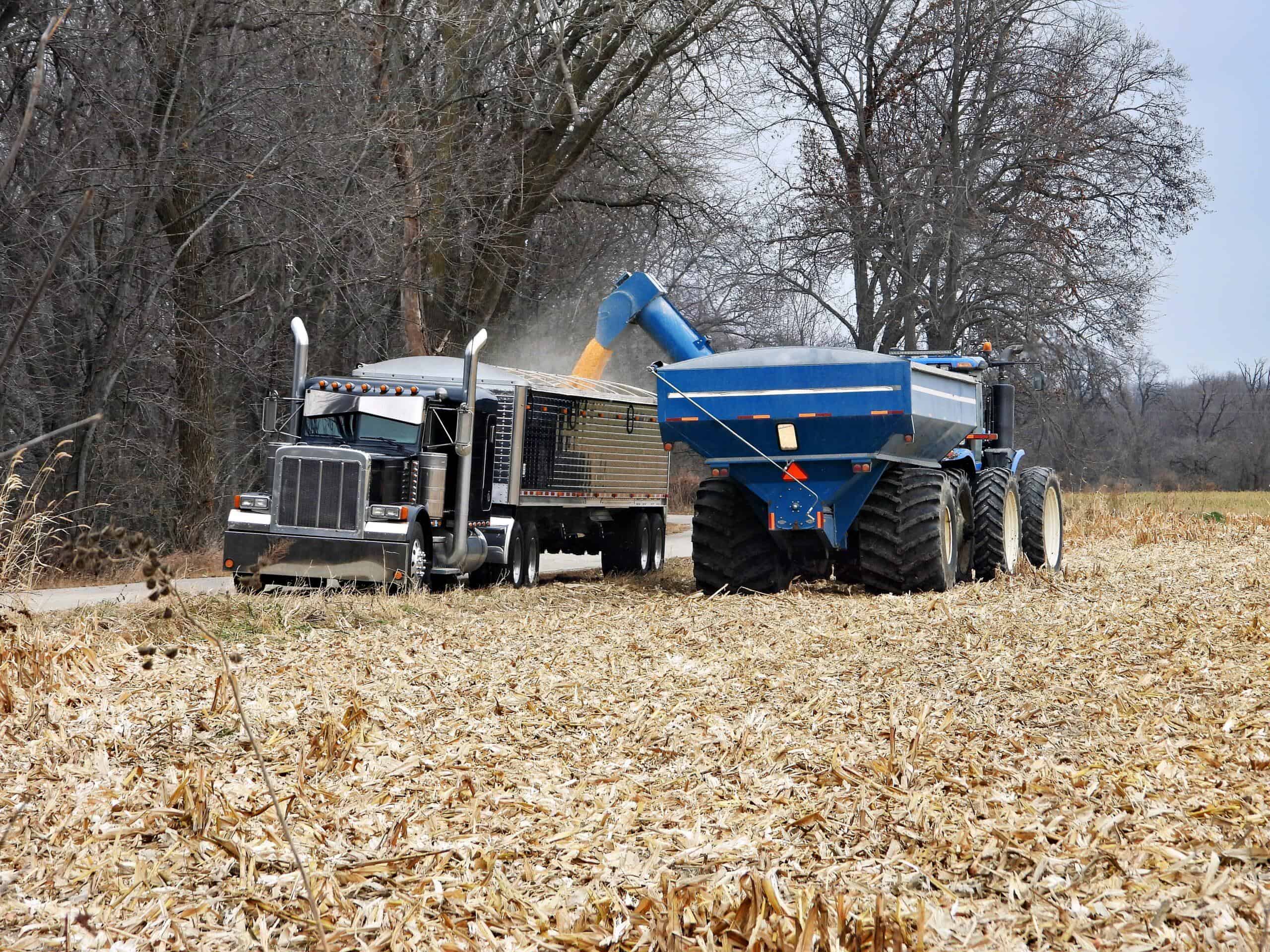
In the case of Angelo Brock, the original defendant in a case that ultimately became a class action in the U.S. District Court for Colorado, he was an independent contractor hired to deliver Flowers Foods products in the Denver area, a job that did not require him to ever set foot out of the state.
The specific interest between Brock and Flowers Foods is that even though Brock signed an agreement with the company requiring arbitration for any grievances, he is arguing that the Federal Arbitration Act allows a worker in interstate commerce to skip arbitration and take their issue to litigation. Pursuing a grievance in arbitration forecloses the possibility of it launching a more lucrative class action or a sympathetic jury that might hand down a seven or eight figure award. And his argument is that he’s in interstate commerce despite never venturing out of the Centennial State because the movement of the goods he delivers all took place in interstate commerce.
Brock won his case at the district court level and in the Tenth Circuit.
No interstate worker status means arbitration
The argument offered before the court by Brock’s outside counsel Traci Lovitt, the lead attorney in Jones Day’s Issues & Appeals practice, was fairly straightforward: Brock didn’t cross state lines in his activities. He isn’t interstate and needed to go to arbitration under the terms of his agreement. The FAA doesn’t help him because, according to Flowers Foods, Brock isn’t an interstate worker. He is not at the tail end of an interstate supply chain; that chain ends with unloading of goods into Brock’s truck. When Flowers Foods’ supply chain unloaded from their facilities on to his, that started a new supply chain that is intrastate.
After losing at the circuit court level, Flowers Foods successfully appealed to the Supreme Court to grant certiorari, even though there are no clear conflicts among circuit court decisions on the issue. That is often a prerequisite to have the high court grant review on a case.
“Brock picks up goods from a warehouse in Colorado and delivers them to retail outlets in Colorado,” Lovitt said in her opening remarks. “When he takes the goods, they’ve crossed their last border and they have been unloaded from the interstate vehicle carrying them. Mr. Brock performs no work in cross-border transportation and is not exempt under Section 1 (of the FAA, which opens the door to litigation rather than arbitration for interstate workers.)”
In roughly 90 minutes of presentations, a host of theoretical situations were discussed by both parties, with the arguments of Angelo Brock put forth by Jennifer Bennett of the firm of Gupta Wessler. (Bennett’s biography notes she was the attorney for Dominick Oliveira in a 2019 decision against carrier New Prime that widened the ability of independent owner operators to bypass arbitration and take grievances into the court system.)
Theoretical arguments abound
Lovitt said Brock’s arguments, with its expansive view of whether a worker could be considered the tail end of an interstate commerce supply chain even if their activity was completely within a state’s borders, could be extended to extreme cases. “Under that logic, the store clerk who unpacks boxes from another state and transports them to the shelf should also be exempt (under section 1 of the FAA),” she said. “The court should reaffirm that section 1 does not have limitless terms.”
During the question period, Justice Samuel Alito laid out another hypothetical, starting with a driver in a supply chain that undertakes a 10-hour intrastate “leg.”
“Driver 2 drives one minute across an interstate border,” he said. “Then Driver 3 completes the journey with another 10-hour intrastate drive. Each driver uses a different vehicle. Is Driver 2 the only person covered by the exemption?”
Loading and unloading
She said driver 2 would be the only one covered by section 1 of the FAA under that scenario “because the bookends are loading and unloading.” The type of supply chain that Angelo Brock would have been involved in would have required unloading out of a warehouse to his truck for delivery of Flowers Foods goods to retail outlets.
That issue of whether goods were loaded or unloaded during a journey came up repeatedly. Unloading somewhere in that supply chain, Lovitt said “would demarcate a new leg of transportation” and subsequent workers could not attach themselves to the earlier interstate activity.
Lovitt cited a decision known as Saxon in which a ground worker for Southwest Airlines was deemed to be part of an interstate transportation chain even though all her work was at one airport. In that ruling and another from just last year involving Flowers Foods known as Bissonnette, Lovitt said, the decisions said a worker must be “engaged in…direct and active employment in cross-border transportation” to receive protection under the FAA.
Lovitt said she supported the findings in Saxon, but that Brock didn’t qualify as an interstate worker in the way the Southwest worker did.
In answering questions from Justice Amy Coney Barrett, Lovitt said a supply chain that was like a “relay”–a term used by the judge–where the goods stay intact until final unloading, like off an airplane as Latrice Saxon did in her role, would put the worker in the interstate category. But that was not the case with Brock, as Lovitt described it.
Kagan is combative
In response to questions from a clearly skeptical Justice Elena Kagan–who said of the drivers “they’re all doing the same thing, regardless of…whether one of them is crossing a state line”–Lovitt said, “We think crossing the state line matters.”
Bennett, in her opening remarks, said “interstate commerce has never been understood to end the moment that freight crosses the border.”
“It ends when the goods reach their final destination,” she said. “And workers who transport goods that are traveling in interstate commerce are, by definition, engaged in that commerce, regardless of whether they personally cross state lines or interact with a vehicle that does.”
Bennett said that is a key principle in the FAA, which came into existence in 1925.
“What if the goods were taken directly off the first truck and handed to Mr. Brock to put on his truck?” Bennett said in criticizing Lovitt’s examples of commerce that would meet the definition of interstate. “Would that count? Highway gas station attendants touch cross-border vehicles all the time. Are they exempt?”
In response to a question from Chief Justice John Roberts, Bennett said the fact that Brock was an independent contractor is not relevant to the definition of whether his role is outside the interstate commerce that brought the Flowers Foods product to his doorstep before he made final delivery.
“You look at the intention of the shipper and the parties to the commerce,” Bennett said “When Flowers is the shipper here, when Flowers shipped its goods, the journey was to the retail store.” And it was Brock who made that delivery to the retail store, she said, as part of the interstate supply chain.
In another theoretical twist, Justice Alito asked Bennett if an Uber Eats driver delivered goods ordered by a customer that were bought from a retail store supplied by an interstate commerce supply chain, would that driver be considered part of the process?
Bennett said it would not. The Flowers Foods chain ends with the retail store, supplied by somebody like Brock, she said. “The Uber Eats driver is a local consumer, a local store and a local driver,” she said.
More articles by John Kingston
How much jail time for the Louisiana staged truck accident attorneys?
Five takeaways from State of Freight: Already strong market gets a wartime jolt
Ohio jury awards $22.5 million in TQL pregnancy case
The post SCOTUS hears arguments on driver status: intra or interstate? appeared first on FreightWaves.
Fuente: https://www.freightwaves.com/news/scotus-hears-arguments-on-driver-status-intra-or-interstate